Table of Contents
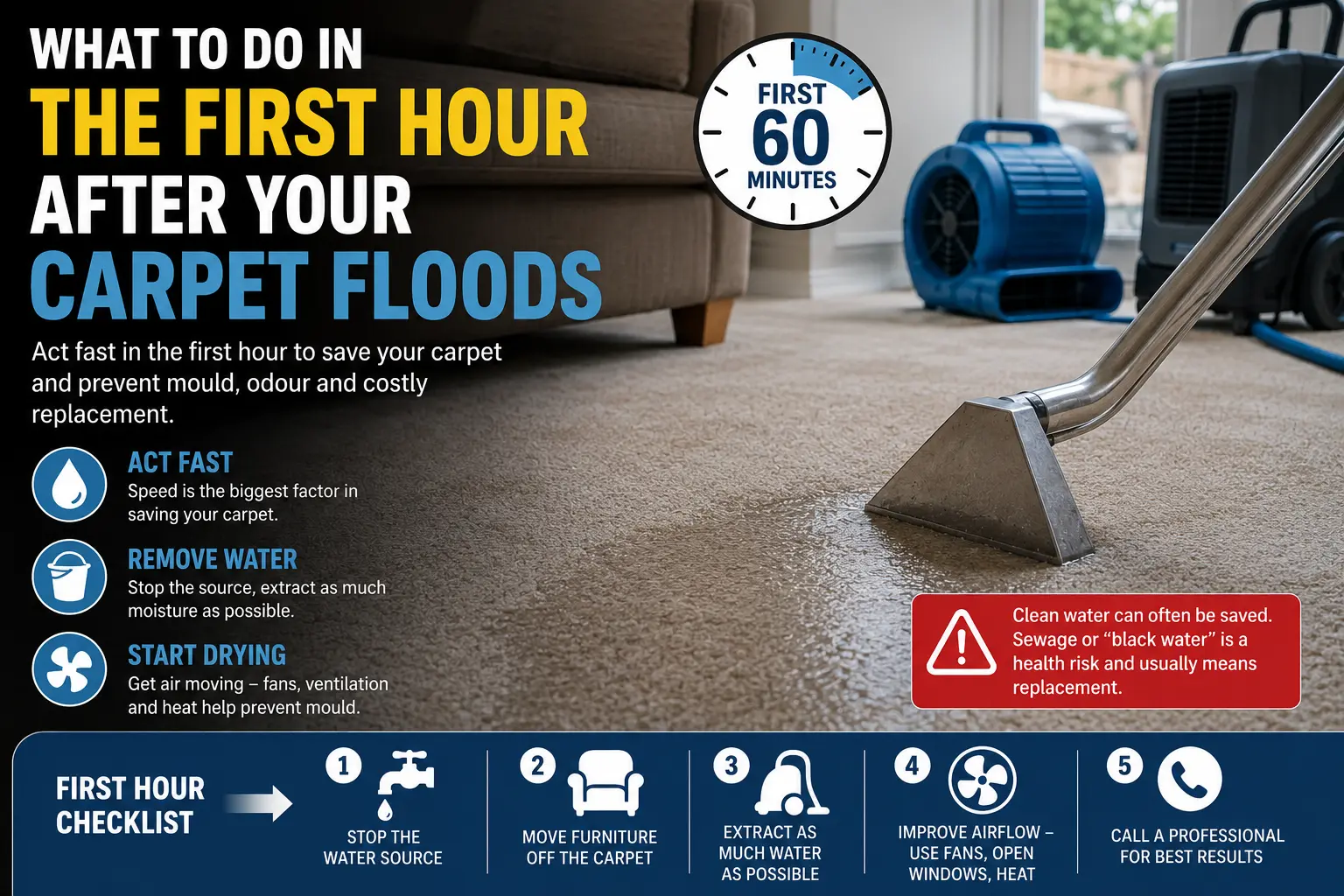
If your carpet floods, the first hour decides whether it’s saved or scrapped. Stop the water, lift furniture off the wet pile, extract as much moisture as you can, and start it drying — then call a professional. Carpet cleaned and dried within 24–48 hours can usually be rescued; left longer, mould and backing damage often force a full replacement.
Key Takeaways
- Act within the first hour — speed is the single biggest factor in whether a flooded carpet survives.
- Stop the water source first, then lift furniture and extract moisture before it soaks the underlay.
- Clean water can often be saved; sewage or “black water” is a health risk and usually means replacement.
- Professional extraction within 24–48 hours gives the best chance of full recovery.
What Should I Do First When My Carpet Floods?
Stop the water at its source before you touch the carpet. A running leak makes everything you do next pointless. Turn off the mains stopcock for a burst pipe, switch off the appliance for a washing-machine or dishwasher leak, or contain an overflow with towels and a bucket.
Once the flow is stopped, work fast:
- Cut the power to the affected area if water is near sockets or electrics — safety first.
- Move furniture off the wet carpet. Wooden legs stain and metal feet rust into the pile within hours.
- Lift small rugs and hang them to drain separately.
- Blot standing water with towels, pressing down hard — don’t rub, which spreads it.
Not sure how bad it is? Treat any flood as urgent. Our emergency carpet cleaning service exists for exactly this moment.
How Do I Get the Water Out of the Carpet?
Remove as much water as possible in the first hour, because water left to soak reaches the underlay and subfloor — where it does the real damage. The more you extract early, the more of the carpet a professional can save.
Your options, best to worst:
- A wet-and-dry vacuum (not a normal vacuum) pulls water from the pile fast
- Towels pressed and wrung repeatedly across the whole area
- A stiff squeegee to push water toward a low point you can lift it from
Then get air moving: open windows, run fans, and turn the heating up. Airflow across the surface is what dries carpet, not heat alone. For the full drying method, see our guide on how to dry a carpet fast after cleaning.
Can a Flooded Carpet Be Saved, or Does It Need Replacing?
Most carpets flooded by clean water can be saved if extracted and professionally dried within 24–48 hours. Beyond that window, or if the water was dirty, the odds drop sharply as mould takes hold in the backing and underlay.
The deciding factor is the water type:
- Clean water (burst pipe, overflowing bath) — usually recoverable if dried fast
- Grey water (washing machine, dishwasher) — recoverable with proper sanitising
- Black water (sewage, drain backup, flood from outside) — a health hazard; the carpet and underlay almost always need replacing
What we see on the job: The carpets we can’t save are rarely the most soaked — they’re the ones left wet for three or four days before anyone called. Time beats water volume every time.
Read the full recovery process in our guide to restoring water-damaged carpets.
How Do I Stop Mould After a Carpet Flood?
Mould can start growing in damp carpet within 24–48 hours, so complete drying is the whole battle. A carpet that feels dry on top can still be wet in the underlay, where mould thrives unseen.
Beat it by:
- Drying fully and fast — fans, ventilation and heat until the underlay is dry, not just the surface
- Lifting the carpet edge to check and dry the underlay and subfloor beneath
- Professional extraction that removes water the surface hides
- Treating any musty smell early — it’s the first warning sign of mould
If a damp smell lingers after drying, act on it. Our guide on getting rid of carpet smell covers the odour side, but a musty carpet often needs professional cleaning to reach the source.
When Should I Call a Professional?
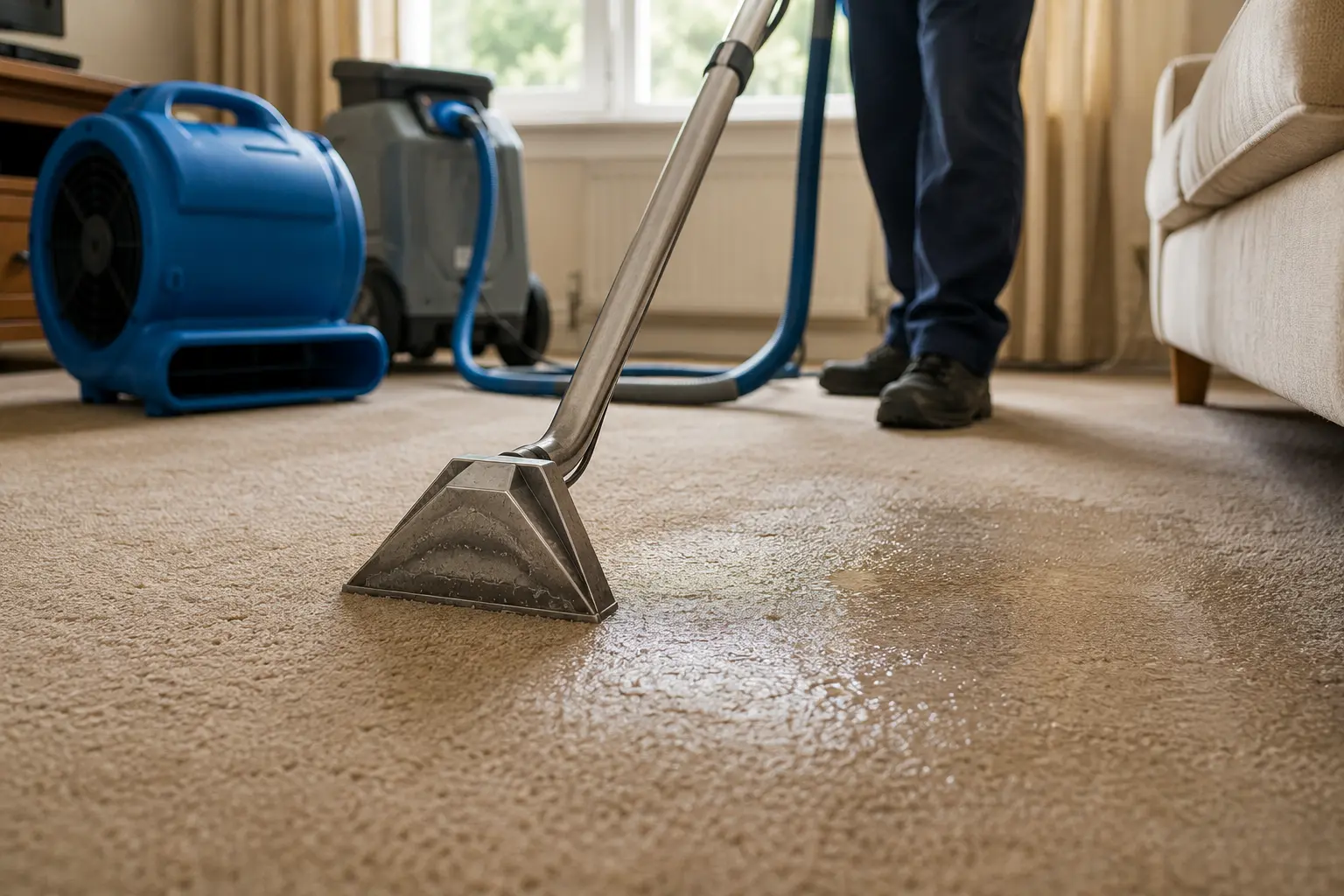
Call immediately for any flood bigger than a spilled bucket, any dirty water, or any carpet you can’t fully dry yourself within a day. Professional extraction reaches the underlay and subfloor, and a proper clean removes contamination that causes smell and mould later.
The cost of an emergency clean is almost always less than replacing a carpet and underlay. If you’re in London, we take same-day and emergency call-outs seven days a week — book an emergency visit or call and describe the flood for a real arrival window.
Frequently Asked Questions
How long does a flooded carpet take to dry?
With good airflow, extraction and heat, a flooded carpet can dry in 12–48 hours, but thick pile and wet underlay take longer. The underlay is the slow part — surface pile dries first while moisture stays trapped beneath. Professional water extraction shortens drying significantly by removing water a vacuum leaves behind.
Is it safe to walk on a flooded carpet?
Avoid walking on a flooded carpet, especially near electrics — switch off the power to the area first. Walking also pushes water deeper into the underlay and spreads any contamination. If you must cross it, wear waterproof footwear and keep off until standing water is removed.
Can I dry a flooded carpet with a hairdryer or heater alone?
Heat alone won’t dry a flooded carpet — you need airflow to carry moisture away, plus extraction to remove the bulk of the water. Heaters and hairdryers help only at the surface and can set stains or damage fibres. Combine fans, open windows and extraction for real results.
Does a flooded carpet always smell afterwards?
Not if it’s dried and cleaned quickly. Smell comes from bacteria and mould in carpet left damp too long, or from dirty water. Fast extraction, full drying and a professional clean usually prevent it. A lingering musty smell after drying is a sign moisture or mould remains in the underlay.
Should I use a wet vacuum on a flooded carpet?
Yes, if you have a wet/dry vacuum designed for water extraction. It can remove a significant amount of standing water before professional equipment arrives. Never use a regular household vacuum, as it is unsafe for water and may be permanently damaged.
How long does it take for a flooded carpet to dry?
Yes, if you have a wet/dry vacuum designed for water extraction. It can remove a significant amount of standing water before professional equipment arrives. Never use a regular household vacuum, as it is unsafe for water and may be permanently damaged.
When should I call a professional carpet cleaning company?
Call a professional immediately if:
The carpet is heavily soaked.
Water has spread beneath the underlay.
The flood involves grey or black water.
You notice a musty smell.
More than a few square metres are affected.
You want to prevent mould and structural damage.
The sooner professional drying begins, the greater the chance of saving the carpet.
The Bottom Line
When a carpet floods, the clock — not the water — is your real enemy. Stop the source, lift furniture, extract every drop you can, and start it drying within the first hour. Clean water caught fast is usually recoverable; delay invites mould and replacement.
For anything bigger than a minor spill, don’t gamble. Book an emergency carpet clean in London and give your carpet its best chance.