Table of Contents
Carpet beetles damage wool carpets, rugs and stored textiles, but it’s the bristly larvae — often called “woolly bears” — that cause the harm, not the adult beetles. To remove them you break the life cycle: find the source, vacuum and heat-treat every affected area, and cut off the food supply so eggs and larvae can’t survive.
Key Takeaways
- The larvae eat the fibres, not the adult beetle — look for small, hairy, striped grubs and shed skins.
- Carpet beetles feed on keratin (wool, silk, fur, feathers) plus stored food and pet food, so infestations often trace back to a pantry or hidden nest.
- Damage looks like irregular holes or bare patches; it’s easy to confuse with carpet moths, but the treatment overlaps.
- Thorough vacuuming plus professional hot cleaning removes larvae and the debris they feed on — the most reliable single step.
What Are Carpet Beetles?
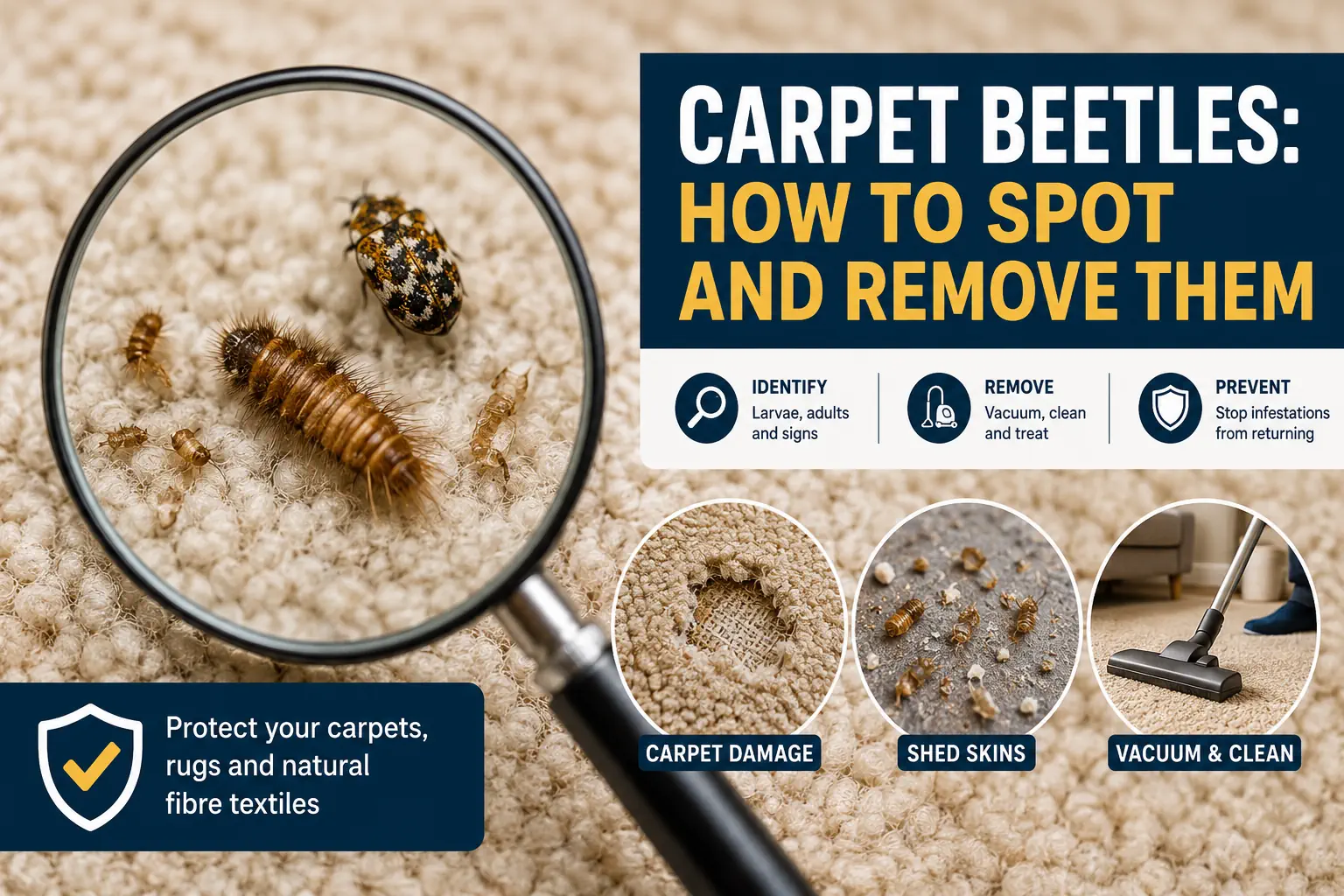
Carpet beetles are small, rounded beetles a few millimetres long, often mottled black, white and yellow (the varied carpet beetle) or solid dark. The adults are harmless and feed on pollen outdoors. The damage indoors comes from their larvae — short, bristly, banded grubs that feed on natural fibres and organic debris for months before pupating.
They enter on cut flowers, through windows, on second-hand furniture, or from birds’ and insects’ nests in lofts and cavities. Once inside, larvae move to dark, undisturbed spots with a food source: under furniture, along carpet edges, inside wardrobes, and near stored wool or dry food.
What we see on the job: Carpet beetle larvae aren’t fussy — we often trace an infestation not to the carpet at all, but to a forgotten bag of pet food, a wool coat, or a dead bird in a loft feeding the colony nearby.
Not sure it’s beetles? Compare with our guide to getting rid of carpet moths.
Carpet Beetles vs Carpet Moths: What’s the Difference?
Carpet beetle larvae are short, hairy and striped and leave irregular holes, while carpet moth larvae are smooth, cream-coloured caterpillars that often trail silky webbing or cases. Both attack wool and both do their damage in hidden spots, so the treatment is largely the same.
Tell them apart:
- Carpet beetle larvae: bristly, banded, “woolly bear” look; no webbing; you may find shed brown skins
- Carpet moth larvae: smooth, pale, sometimes in a silk tube or case; leave fine webbing on the pile
- Adults: beetles are rounded and hard-shelled; moths are soft, buff-coloured and flutter near the floor
- Damage: beetles tend to make scattered holes; moths clear larger bald patches
If you’re seeing webbing, it’s more likely moths. Either way, read on — the removal steps below work for both.
How Do I Get Rid of Carpet Beetles?
To get rid of carpet beetles you must remove the larvae, eggs and their food source together, because cleaning the carpet alone leaves the colony feeding elsewhere. A combined clean-and-source approach clears them reliably.
Work through these steps:
- Find the source. Check pantry items, pet food, stored wool clothing, and lofts for nests or dead birds. Remove and seal or bin the source.
- Move furniture and declutter. Larvae hide in the still, dark areas under and behind furniture — expose them.
- Vacuum intensively. Cover the whole room, edges and corners included, then empty the vacuum outside. Repeat every day or two for two to three weeks to catch newly hatched larvae.
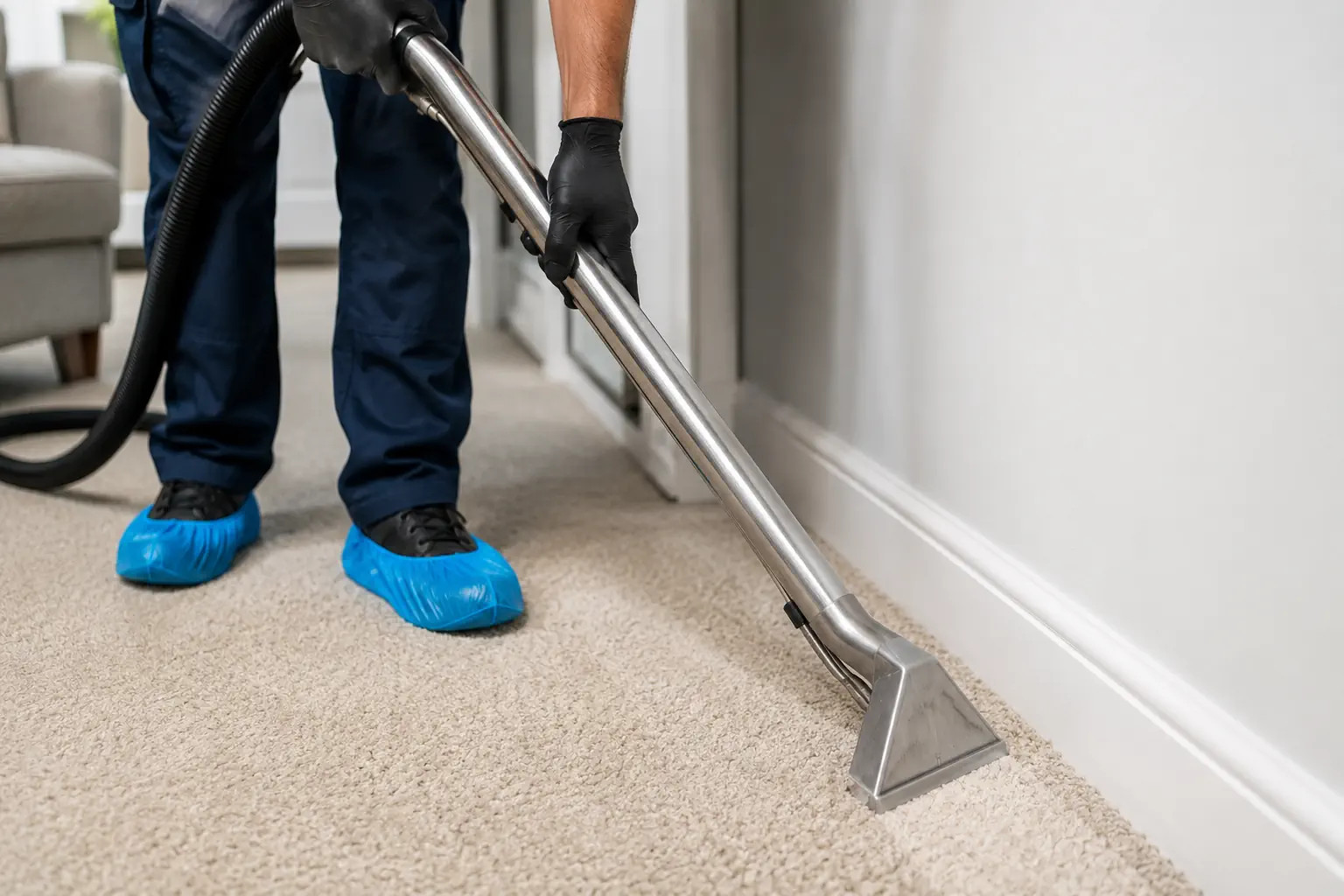
- Apply heat or steam. High temperature kills larvae and eggs in the pile where vacuuming can’t reach. Professional hot cleaning does this across a whole carpet.
- Launder or freeze textiles. Hot-wash affected clothing and bedding, or freeze small items to kill larvae.
- Clean vulnerable rugs professionally so wool and silk aren’t damaged by DIY heat.
Because carpet beetles feed on the dust, hair and food debris trapped in a carpet as well as the wool itself, a deep clean does double duty. Our professional hot steam cleaning in London kills larvae with heat and extracts the debris that feeds them.
Does Carpet Cleaning Kill Carpet Beetles?
Professional hot-water and steam cleaning kills carpet beetle larvae and eggs through heat and extracts them from the pile, while also removing the shed skins, hair and food debris the larvae rely on. It’s the most effective single treatment for an active infestation.
Cleaning won’t fix the problem alone if the source — pet food, a wool store, a loft nest — is still feeding the colony, so pair it with the source removal and vacuuming routine above. To understand the method, see what hot water extraction cleaning is.
How Do I Stop Carpet Beetles Coming Back?
Prevention means denying larvae food and stillness: keep natural fibres clean and disturbed, and store food and wool sealed. Like moths, beetles are an ongoing habit to manage, not a one-time kill.
Keep them away:
- Vacuum hidden and edge areas regularly, moving furniture every few weeks
- Store pet food and dry goods in sealed containers, not open bags
- Seal wool and silk textiles in bags or boxes when not in use
- Check cut flowers and second-hand items before bringing them in — adults hitch a ride
- Clear loft nests and dead birds/insects, common hidden food sources
- Have vulnerable wool rugs cleaned professionally on a schedule
Homes with wool carpets, natural-fibre rugs and pets are most at risk. A regular professional clean is the simplest long-term defence.
When Should I Call a Professional?
Call a professional when the damage is spreading, keeps returning, or affects wool and silk rugs you can’t risk ruining with DIY heat. A clean costs far less than replacing a damaged carpet or an antique rug, and it removes the deep larvae a household vacuum misses.
If you’re in London, we clean carpets, wool and Persian rugs, mattresses and upholstery — book through our London carpet cleaning service. Beetles in a mattress or upholstery? Our mattress cleaning service covers those too.
Frequently Asked Questions
Are carpet beetles harmful to humans?
Carpet beetles don’t bite or spread disease, but the larvae’s tiny bristles can irritate skin, eyes or airways in sensitive people, sometimes mistaken for bed bug bites. The main harm is to wool carpets, rugs, clothing and stored food. Removing the larvae and cleaning affected areas resolves both the damage and the irritation.
What causes carpet beetles in the house?
Carpet beetles come in on cut flowers, through open windows, on second-hand furniture, or from birds’ and insects’ nests. Larvae then settle wherever there’s a food source — wool carpet, stored clothing, pet food or crumbs — in dark, undisturbed spots. Clutter and infrequent cleaning let them breed unnoticed.
How do I tell carpet beetles from bed bugs?
Carpet beetle larvae are bristly, striped grubs found near carpets, wardrobes and food; bed bugs are flat, reddish-brown insects that live near beds and feed on blood. Beetle “bites” are actually bristle irritation, not true bites. If marks cluster around where you sleep, see our bed bug removal guide.
How long does it take to get rid of carpet beetles?
Expect two to three weeks of consistent treatment. Because eggs keep hatching, one clean rarely ends it — ongoing vacuuming catches new larvae, while removing the food source stops the cycle. A professional heat clean early on shortens the process by killing the bulk of larvae and eggs at once.
Can carpet beetles live in synthetic carpet?
Larvae feed on keratin, so pure synthetic carpet (nylon, polypropylene) is rarely eaten. But beetles can still live in synthetic pile if it holds enough dust, hair, skin cells and food debris to feed on. Regular vacuuming that removes this debris makes any carpet far less hospitable to them.
The Bottom Line
Carpet beetles damage wool carpets, rugs and textiles through their bristly larvae — not the adult beetles — and they’re easy to confuse with carpet moths, though the fix is similar. Remove them by finding the food source, vacuuming relentlessly, applying heat or steam, and sealing food and wool away. Prevention is an ongoing cleaning habit.
If beetles keep returning or your wool and silk rugs are at risk, don’t gamble with DIY heat. Book a professional carpet clean in London and start prevention on a clean slate.